Rain Gutter Solutions · Homeowner guide
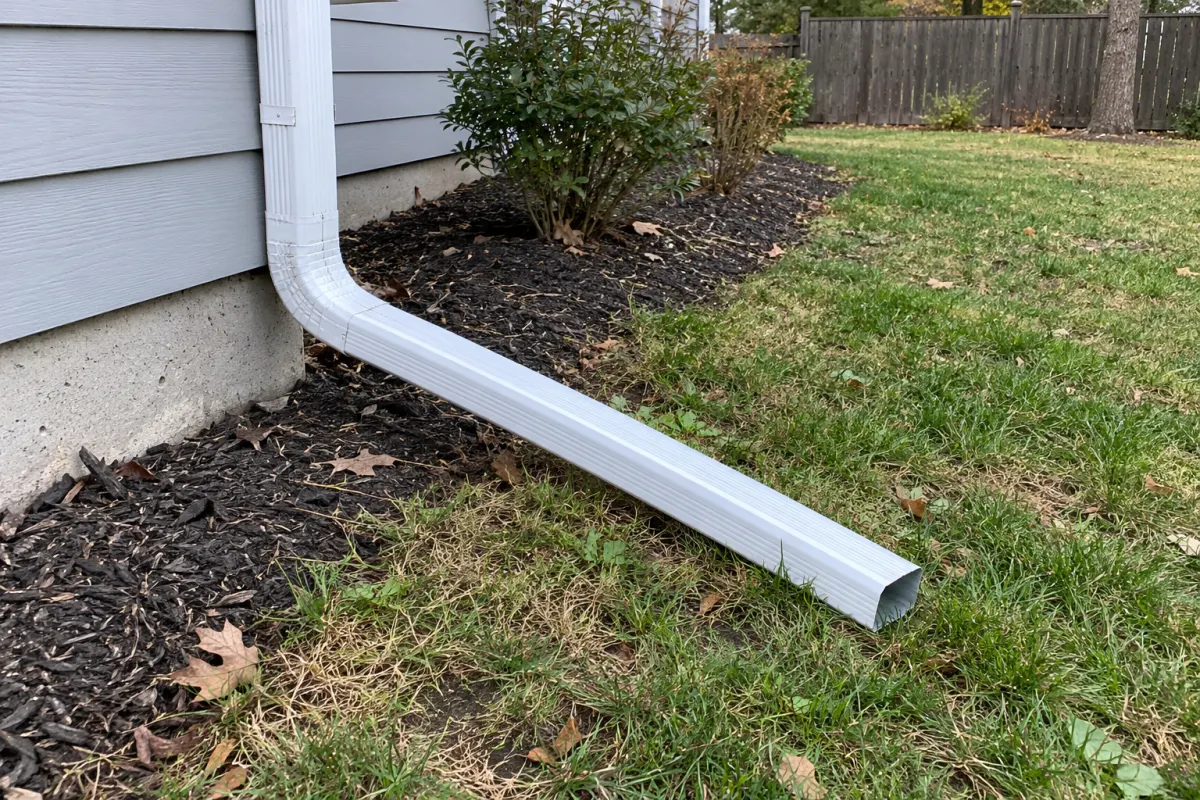
A downspout extension and an underground drain line both move roof runoff beyond the wall. The main difference is the route: one is visible above ground, while the other carries water through a buried line to a planned outlet. Neither option works well if water is released where it cannot drain appropriately.
Start with the destination. Where should the water go, and can it get there without creating another problem? The appearance of the pipe comes second.
When an above-ground extension makes sense
A visible extension can be straightforward to inspect. You can see whether it is connected, whether the outlet is open and whether someone moved it during mowing. It may suit a route where there is enough room to direct runoff onto an appropriate discharge area without obstructing access.
The practical drawback is that the extension occupies space. If it crosses a walking route, catches on maintenance equipment or is repeatedly pushed back against the house, the setup needs reconsideration. An extension only works when it stays connected and points toward a useful destination.
When to discuss underground drainage
A buried route may be worth considering when a visible extension is continually in the way or several roof-runoff paths need a coordinated plan. It is not automatically the right answer just because it looks cleaner.
Ask how the proposed route fits the grade, landscaping, access and final discharge area. The scope should identify the downspouts being connected and the outlet location. Excavation and restoration also need to be explained before work begins.
What a pop-up emitter actually does
A pop-up emitter provides an outlet at the end of the line. Its cap opens as water arrives and closes as the flow subsides. It releases water; it is not an underground storage tank or a guarantee that the surrounding ground can absorb everything delivered to it.
That makes placement important. An outlet needs a suitable receiving area and should remain accessible for checks and maintenance. NDS notes that a clogged emitter can back up the connected drainage system, so the cap and surrounding area should not be forgotten after installation.
Compare the upkeep as well as the appearance
- Visible extension: check its connection, position and open end after mowing or yard work.
- Buried line: ask how a blockage would be accessed and what maintenance is recommended.
- Pop-up outlet: keep the cap and surrounding vegetation clear enough to operate.
- Either option: watch where water actually travels during rainfall, from a safe location.
Do not force a tool into an unfamiliar drain line or excavate without locating underground utilities. If a line is not draining, ask for an assessment rather than assuming the outlet simply needs to be moved farther away.
A decision example
Imagine an extension that directs runoff toward a usable lawn area but gets disconnected whenever the lawn is mowed. A buried route might reduce that obstruction, provided the grade and outlet location work. On another property, a short visible route may already stay connected and discharge appropriately. Burying it may add work without addressing a real problem.
These are examples of questions to weigh, not descriptions of RGS installations or promises about a particular property's drainage.
What RGS should assess on site
RGS offers underground downspout drainage with pop-up emitters. The visit looks at roof runoff, existing downspouts, the proposed route and where water can discharge. Ask whether the symptom is actually from the roof or whether another site issue needs attention.
The itemized quote should show the proposed connections, route, emitters and included restoration. Ask about any limitations before booking. A gutter drain is part of water management, not a substitute for evaluating every cause of water near a home.
Common questions
Is an underground downspout line the same as a French drain?
No. A roof-runoff line carries water collected by the gutter to a planned discharge point. A French drain is generally intended to collect water from surrounding soil through a different arrangement. Ask what system is proposed and what source of water it addresses.
Does a pop-up emitter make the water disappear underground?
No. It is an outlet. The cap rises as water arrives and discharges runoff at the surface, then settles as flow stops. The discharge area must still be suitable, and the outlet needs to remain accessible and clear.
Will burying a downspout fix every puddle in my yard?
No. It may address roof runoff from the connected downspout, but not every source of standing water. Grade, other drainage routes and site conditions need to be considered before recommending work.
Want someone to look at your roofline?
Request a free estimate in the regular service area. A travel charge applies to farther jobs and is quoted before scheduling.